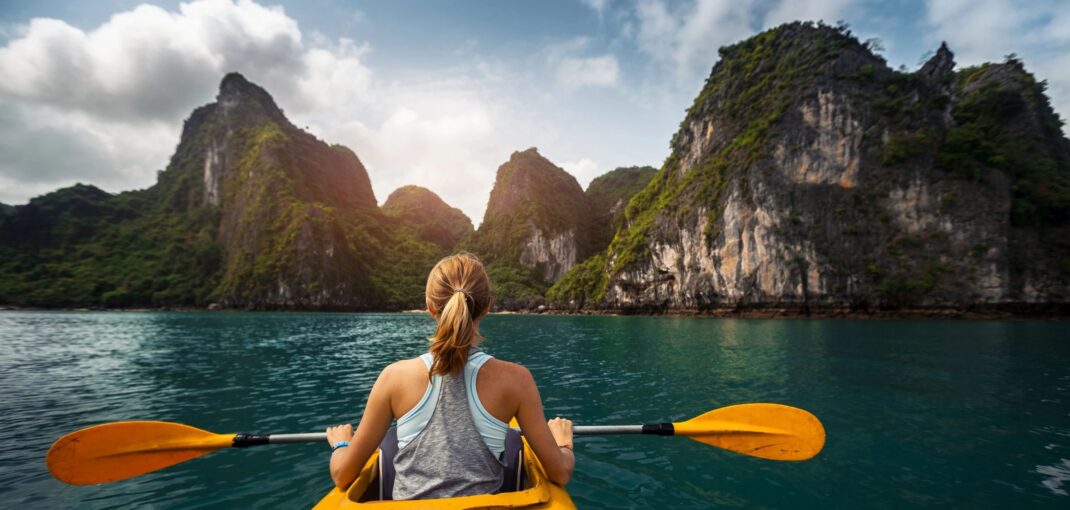
Kayaking is an exciting and accessible water sport that offers fun, exercise, and adventure. Whether you’re paddling on a serene lake or navigating through rapids, this guide will help you get started.
Equipment You’ll Need
- Kayak: Choose the type that fits your intended use:
- Recreational Kayak: Stable and easy to use, perfect for calm waters.
- Touring Kayak: Designed for long-distance paddling on open water.
- Whitewater Kayak: Built for maneuverability in rapids.
- Sit-on-Top Kayak: Great for beginners, easy entry and exit.
- Inflatable Kayak: Portable and versatile.
- Paddle: Select the right length based on your height and kayak width. A general guide:
- 5’0″ to 5’5″: 210-220 cm
- 5’6″ to 6’0″: 220-230 cm
- Over 6’0″: 230-240 cm
- Personal Flotation Device (PFD): Always wear a properly fitted PFD.
- Helmet: Necessary for whitewater kayaking.
- Spray Skirt: Keeps water out of sit-inside kayaks.
- Dry Bag: To keep your belongings dry.
- Appropriate Clothing: Wear quick-dry, moisture-wicking materials and consider layering for varying temperatures.
Preparing for Your Kayak Trip
- Check the Weather: Ensure conditions are safe for kayaking.
- Inform Someone of Your Plans: Let someone know your route and expected return time.
- Inspect Your Gear: Make sure your kayak, paddle, and PFD are in good condition.
Entering and Exiting the Kayak
From Shore:
- Position the kayak perpendicular to the shore.
- Straddle the kayak, sit in the seat, and then bring your legs inside.
- Push off gently from the shore.
From a Dock:
- Sit on the dock with your feet in the kayak.
- Lower yourself into the seat.
- Swing your legs inside the kayak.
Basic Paddling Techniques
Paddle Grip:
- Hold the paddle with both hands, a bit wider than shoulder-width apart.
- The concave side of the blade should face you.
Forward Stroke:
- Insert the paddle blade into the water near your toes.
- Pull back towards your hip.
- Alternate sides smoothly.
Turning (Sweep Stroke):
- For a right turn, sweep the left paddle blade in a wide arc from the bow to the stern.
- For a left turn, sweep the right paddle blade similarly.
Stopping:
- Back-paddle by inserting the paddle blade behind you and pulling it forward.
Maneuvering the Kayak
Edging:
- Lean the kayak slightly to one side to assist with turning.
Bracing:
- Use the paddle to push against the water to prevent capsizing.
Safety Tips
- Wear Your PFD: Always wear your personal flotation device.
- Stay Hydrated and Protected: Bring water and wear sunscreen.
- Know Your Limits: Start in calm waters and gradually take on more challenging conditions.
- Learn to Self-Rescue: Practice techniques to get back into your kayak if you capsize.
Practice Areas
- Calm Lakes: Ideal for practicing basic strokes and getting comfortable.
- Slow Rivers: Great for learning to navigate currents.
- Coastal Areas: Experience waves and open water once you’re more confident.
Troubleshooting Common Issues
- Tired Arms: Use your torso for power, not just your arms.
- Difficulty Steering: Focus on sweeping strokes and edging.
- Capsizing: Stay calm, practice wet exits, and re-entry techniques.
Enjoying the Experience
Kayaking can be both a serene and exhilarating way to explore waterways. Take your time learning the basics, always prioritize safety, and enjoy the unique perspective that kayaking offers. Happy paddling!